
Yes, you can safely eat pomegranate seeds. People all over the world enjoy these seeds in various dishes. You can find them in Middle Eastern, South Asian, and Mexican cuisines.
| Cuisine | Example Dishes |
|---|---|
| Middle Eastern | Pomegranate molasses in many foods, khoresh fesenjoon |
| South Asian | Many traditional foods with pomegranate seeds |
| Mexican | Chiles en nogada, which showcases the Mexican flag |
If you are wondering, “should I eat pomegranate seeds?” the answer is that most people can enjoy them without any issues. Just be sure to chew the seeds well to avoid choking. However, some individuals with sensitive stomachs should exercise caution.
Key Takeaways
- Most people can eat pomegranate seeds safely. Chew them well so you do not choke. Try a small amount first if you have never eaten them before.
- These seeds have many good nutrients. They have fiber, vitamins, and antioxidants. These help your body stay healthy and help with digestion.
- Do not eat too many seeds. Eat only half of a medium pomegranate each day. This helps you get the benefits and avoid stomach problems.
- Always get pomegranate seeds ready in a safe way. Use the right way to take out the seeds. Watch young children so they do not choke.
- If you have allergies or health problems, talk to your doctor first. Ask before you start eating pomegranate seeds.
Should I Eat Pomegranate Seeds?
What Are Pomegranate Seeds?
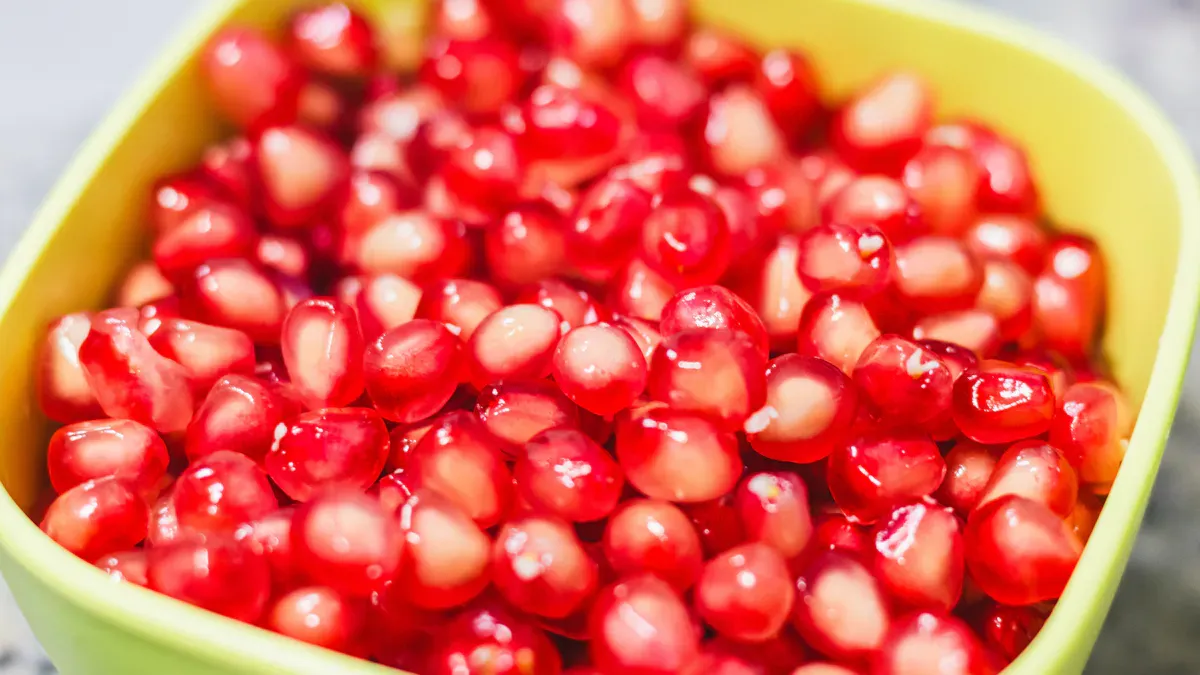
Pomegranate seeds are tiny and crunchy. They sit inside the juicy red arils of a pomegranate. When you open a pomegranate, you see groups of arils. Each aril has a sweet cover and a hard seed inside. You can eat both parts. Many people like the flavor from the aril and the crunch from the seed.
The seeds have nutrients that help your body stay healthy. Here is what you get from eating pomegranate seeds:
- About 4.7 grams of protein
- 3.3 grams of fat
- 52 grams of carbohydrates
- Around 11.3 grams of fiber per fruit
- Vitamins C and K, folate, calcium, magnesium, and potassium
The arils taste sweet and juicy. The seeds give crunch and extra nutrition. If you ask, “should I eat pomegranate seeds,” you can feel good knowing they are healthy.
Are They Safe for Everyone?
Most people can eat pomegranate seeds safely. You can put them in salads or yogurt. You can also eat them alone. Eating a small amount helps you avoid problems. Experts say half a medium pomegranate each day is good. This gives you benefits and avoids stomach issues.
Some people may react to pomegranate seeds. These reactions can be:
- Itching or swelling in the mouth or throat
- Trouble breathing
- Gas, bloating, or constipation
- Problems if you take medicine for blood pressure or diabetes
If you have never tried pomegranate seeds, start with a little bit. Watch for any signs of discomfort. If you feel okay, you can eat more slowly. If you ask, “should I eat pomegranate seeds,” most people can, but listen to your body.
Who Should Be Careful?
Some people need to be careful with pomegranate seeds. People with high potassium levels should limit foods with potassium, like pomegranate seeds. If you have a sensitive stomach, eating too many seeds can cause gas, bloating, or constipation. Children and older adults should chew seeds well to avoid choking.
Tip: Always chew pomegranate seeds well. This helps your body digest them and lowers choking risk.
Some people ask if the white part of the seed is safe. You can eat the whole seed, including the white part. It is not harmful. The white part adds fiber, which helps digestion.
If you have allergies or take certain medicines, talk to your doctor before eating pomegranate seeds. This keeps you safe and lets you enjoy the benefits.
Health Benefits
Key Nutrients
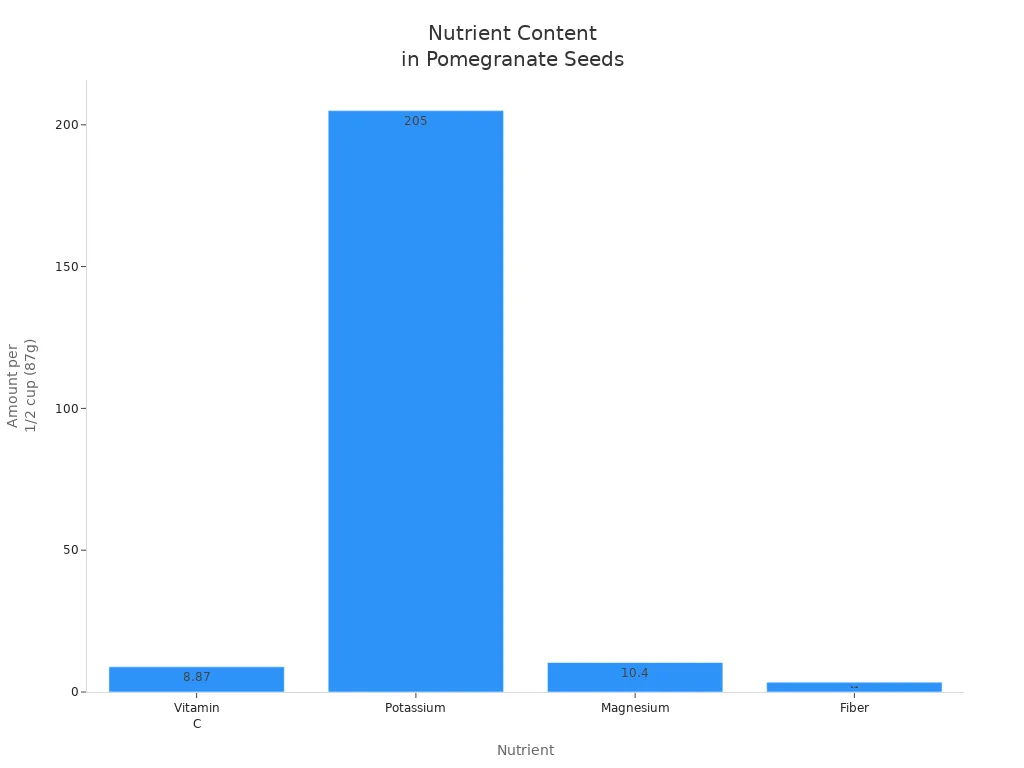
Pomegranate seeds have many nutrients your body needs. They give you vitamins and minerals that help you stay healthy. Here is a table that shows what you get in half a cup:
| Nutrient | Amount per 1/2 cup (87g) |
|---|---|
| Vitamin C | 8.87 mg |
| Potassium | 205 mg |
| Magnesium | 10.4 mg |
| Fiber | 3.48 g |
You also get calcium, copper, iron, manganese, phosphorus, zinc, vitamin K, and B vitamins. These nutrients help your bones, muscles, and immune system. If you want to compare these nutrients, look at this chart:
Antioxidants
Pomegranate seeds have lots of antioxidants. These are plant compounds that protect your cells from harm. Pomegranates have more antioxidants than red wine or green tea. The main ones are polyphenols and punicalagin. They help your heart and may lower swelling in your body. Some studies show pomegranate juice can slow cancer cell growth, especially in prostate cancer. Eating these seeds may also help your brain and urinary health.
Note: Antioxidants in pomegranate seeds may help lower your risk of heart disease and diabetes.
Fiber and Digestion
Pomegranate seeds give you a lot of fiber. Fiber helps your stomach and intestines work well. It keeps food moving and helps you feel full. Half a cup of seeds gives you about 3.5 grams of fiber. This can help stop constipation and keep your digestion healthy.
- Fiber helps you feel less hungry.
- It slows down how fast sugar enters your blood.
- It helps you have healthy bowel movements.
If you wonder if pomegranate seeds are good for digestion, the answer is yes for most people. The fiber in these seeds helps your gut and keeps you regular.
Preparing Pomegranate Seeds
Choosing and Opening
You want to pick a pomegranate that feels heavy for its size. The skin should look smooth and bright. A heavy fruit means it has lots of juicy seeds inside. When you get ready to open it, use a small sharp knife. Cut off the little stem at the top. Place the fruit on a large bowl or use a dark kitchen towel to catch any juice. This helps keep your kitchen clean and prevents stains.
Tip: Always use a stable cutting board and keep your fingers away from the knife to avoid injury.
Removing Seeds
You can remove pomegranate seeds in a few easy steps:
- Score the skin from top to bottom along the natural ridges. Do not cut too deep.
- Hold the fruit over a bowl and gently pull it apart into sections.
- Peel off the white membrane around each section.
- Push the seeds out into the bowl with your fingers.
- For a faster method, cut the fruit in half around the middle. Hold it seed side down over a bowl. Firmly tap the back with a wooden spoon until the seeds fall out.
- If you want to avoid splashing, fill the bowl halfway with water. The seeds will sink, and the white pith will float.
These steps help you get the seeds out quickly and safely. If you prepare seeds for children or older adults, make sure to remove any large pieces of membrane. This lowers the risk of choking.
Washing and Storing
After you remove the seeds, rinse them under cool water. Use a mesh strainer or slotted spoon to help wash away any leftover pith. Let the seeds drain well. Store them in an airtight container in the fridge. They stay fresh for up to five days.
If you ever wonder, should I eat pomegranate seeds, you can feel confident when you prepare them the right way. Safe handling makes them a healthy snack for everyone.
How to Eat Pomegranate Seeds Safely

Eating Whole Seeds
You can eat pomegranate seeds whole. The seeds give you fiber, antioxidants, and nutrients like vitamin C and magnesium. Most people enjoy the crunch and health benefits. If you eat too many seeds, you might feel stomach pain or have digestive problems, especially if you have a sensitive stomach or conditions like IBS. Always chew the seeds well before swallowing. This helps your body digest them and lowers the risk of choking.
Tip: If you serve pomegranate seeds to children or people who have trouble swallowing, use extra care. Seeds can cause choking. You may want to offer pomegranate juice instead, but make sure it is 100% pure and not sweetened with sugar.
- Avoid giving whole seeds to young children.
- Introduce new foods slowly and watch for allergies.
- Do not grind the white skin into juice, as it can taste bitter.
- Limit juice portions to prevent stomach upset.
Adding to Meals
Pomegranate seeds add color, crunch, and nutrition to many dishes. You can use them in both sweet and savory recipes. Try these popular ways to enjoy them:
- Toss seeds into a salad for a burst of flavor.
- Sprinkle them over cooked meat or seafood.
- Top your yogurt, pancakes, or waffles with seeds.
- Blend seeds to make fresh juice, then strain out the pulp.
- Freeze the juice for up to six months.
- Make ice cream with fresh pomegranate juice.
- Eat the seeds by themselves as a snack.
You can also add seeds to oatmeal, smoothies, or baked goods like muffins and energy balls. Pomegranate seeds work well in many recipes and help you eat a balanced diet.
Portion Tips
Pomegranate seeds are low in calories. Half a cup has only about 72 calories. This makes them a healthy snack. Eating the right amount helps you get fiber and antioxidants without upsetting your stomach. Start with a small portion, especially if you are new to eating the seeds. Most people do well with half a medium pomegranate per day.
Note: Eating too many seeds at once can cause gas or constipation. Listen to your body and enjoy pomegranate seeds in moderation.
Common Concerns
Digestive Issues
You might wonder if pomegranate seeds hurt your stomach. Most people can eat them without problems, but some feel uncomfortable. The seeds have tannins and insoluble fiber. These things can slow digestion or cause constipation. This happens more if you do not drink enough water. The hard outside of the seed can also be tough for some people to break down.
Here is a table that shows what can cause digestive issues:
| Factor | Description | Source |
|---|---|---|
| Tannins | Astringent compounds that can slow intestinal motility, leading to constipation. | Journal of Gastrointestinal Health (2025) |
| Excess Insoluble Fiber | High amounts of insoluble fiber can worsen constipation, especially without hydration. | Clinical Nutrition & Digestion (2025) |
| Difficult-to-Digest Seeds | The tough outer covering of pomegranate seeds may not break down fully, causing discomfort. | Digestive Disorders Review (2025) |
| Reduced Gut Motility | Polyphenols may alter gut microbiota, reducing bowel regularity in sensitive individuals. | Gut Microbiota Science (2025) |
| Low Water Intake | Insufficient hydration with high fiber intake can lead to harder stools and constipation. | International Journal of Nutrition & Hydration (2025) |
You can help your digestion by following these steps: Drink six to eight glasses of water every day. Eat only one medium pomegranate each day. This is about 150 to 200 grams of arils. Eat seeds with yogurt or kefir to help your gut. Do not use pomegranate peel supplements because they have lots of tannins. Always chew the seeds well before you swallow.
Allergies and Sensitivities
Most people are not allergic to pomegranate seeds, but you should know the signs. Allergic reactions can be mild or very serious. If you feel itchy, swollen, or have trouble breathing after eating seeds, stop and get help.
Here is a table of possible symptoms:
| Symptoms | Severity Level |
|---|---|
| Oral Allergy Syndrome (OAS) | Mild to Moderate |
| Urticaria | Mild to Moderate |
| Angioedema | Moderate to Severe |
| Gastrointestinal symptoms | Mild to Moderate |
| Anaphylaxis | Severe |
If you have food allergies, try a small amount first. Watch for any reaction.
Myths About Seeds
You might hear things about pomegranate seeds that are not true. Here are some common myths and facts:
| Myth | Explanation |
|---|---|
| The best pomegranates are packed with more seeds | The number of seeds does not affect quality or nutrition. Ripeness matters more. |
| Pomegranates are just for juicing | You can use seeds in many dishes, not just juice. |
| Eating pomegranate seeds can be toxic | Seeds are safe and healthy to eat. |
| They can cure countless health issues | Pomegranates have benefits, but they are not a cure-all. |
| Pomegranates are too expensive | They are affordable during harvest season. |
Remember: Eating pomegranate seeds in moderation keeps you safe and healthy. If you have concerns, talk to your doctor.
You can enjoy pomegranate seeds as a healthy snack when you eat them in moderation. Always prepare them safely to lower choking risk:
- Serve seeds in an age-appropriate way.
- Stay close to children during meals.
- Learn signs of choking and first aid.
To remove seeds, roll the fruit, score the skin, and tap out the seeds over a bowl. If you have digestive issues or high potassium, talk to your doctor first. Enjoy the bright taste and health benefits of pomegranate seeds!
FAQ
Can you eat pomegranate seeds every day?
Yes, you can eat pomegranate seeds daily. You get fiber, vitamins, and antioxidants. Start with half a cup. Watch how your body feels. Drink enough water to help with digestion.
Are pomegranate seeds safe for kids?
Pomegranate seeds are safe for most children. Always supervise young kids. Cut the seeds into smaller pieces or offer juice to lower choking risk. Chewing well helps prevent problems.
Do pomegranate seeds cause weight gain?
Pomegranate seeds are low in calories. You can enjoy them as a snack. They help you feel full because of the fiber. Eating them in moderation will not cause weight gain.
Can you freeze pomegranate seeds?
Yes, you can freeze pomegranate seeds. Place them in a single layer on a tray. Move them to a freezer bag after they freeze. Use them in smoothies or yogurt later.
What is the best way to store pomegranate seeds?
Store pomegranate seeds in an airtight container in your fridge. They stay fresh for up to five days. Rinse them before eating. You can also freeze them for longer storage.