Are pomegranate seeds good for you? Yes, they are a smart snack. Look at what they give you:
| Nutrient | Amount per 1/2 cup |
|---|---|
| Calories | 72 |
| Carbohydrates | 16 grams |
| Fiber | 3 grams |
| Folate | Present |
| Potassium | Present |
| Vitamin K | Present |
They have lots of fiber and antioxidants. These help your heart stay healthy. They may also lower swelling in your body.
Key Takeaways
- Pomegranate seeds have lots of nutrients like fiber, vitamin C, and potassium. This makes them a good snack for your health.
- These seeds have strong antioxidants. Antioxidants help keep your cells safe. They may also lower the chance of heart disease and some cancers.
- Eating pomegranate seeds helps your digestion and gut health. This is because they have fiber and prebiotic effects.
Are Pomegranate Seeds Good for You?
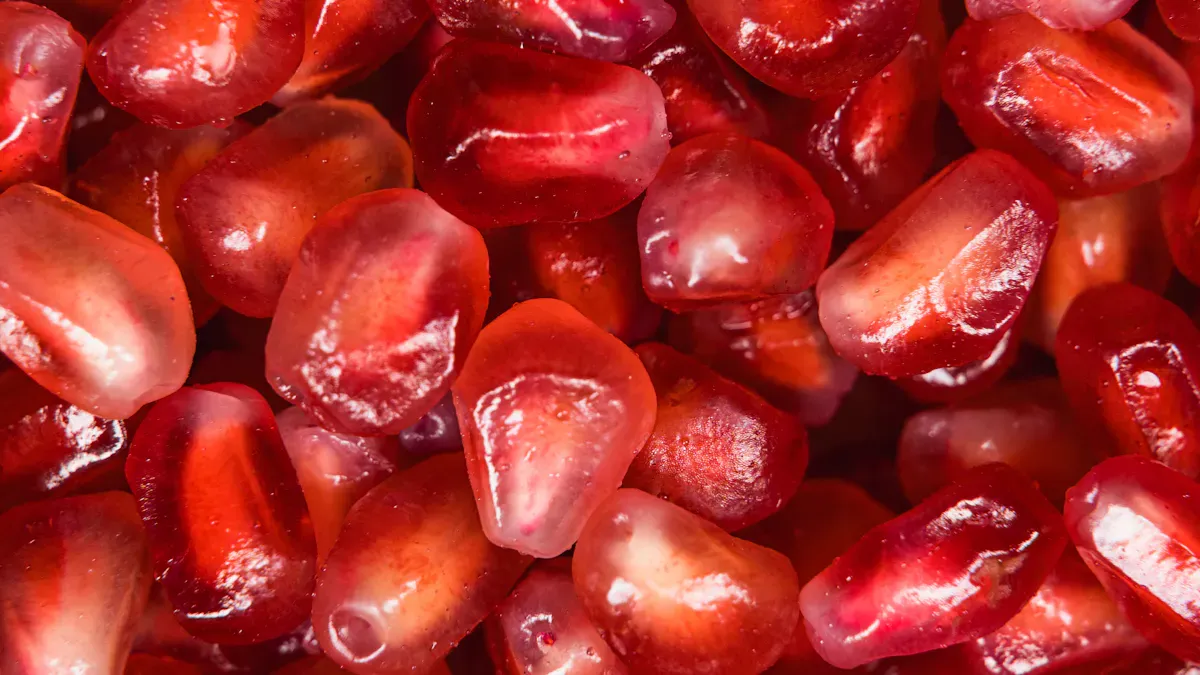
You may ask if pomegranate seeds are good for you. The answer is yes. These seeds have lots of nutrition and health benefits. Let’s see why pomegranate seeds are a smart food for your diet.
Pomegranate Nutrition Facts
Pomegranate seeds give you many important nutrients. You get water, carbohydrates, protein, and a little fat. Here is what you get in 100 grams:
| Nutrient | Amount per 100g | Daily Value (%) |
|---|---|---|
| Water | 78% | N/A |
| Carbohydrates | 19% | N/A |
| Protein | 2% | N/A |
| Fat | 1% | N/A |
You also get fiber and sugar. One cup of pomegranate seeds has about 7 grams of fiber and 20 grams of sugar. If you eat half a cup, you get about 72 calories and 5.5 grams of fiber. This makes pomegranate seeds a filling snack that helps your digestion.
Tip: Chew the seeds to get all the fiber and healthy fats. If you swallow them whole, you miss these benefits.
Key Vitamins and Minerals
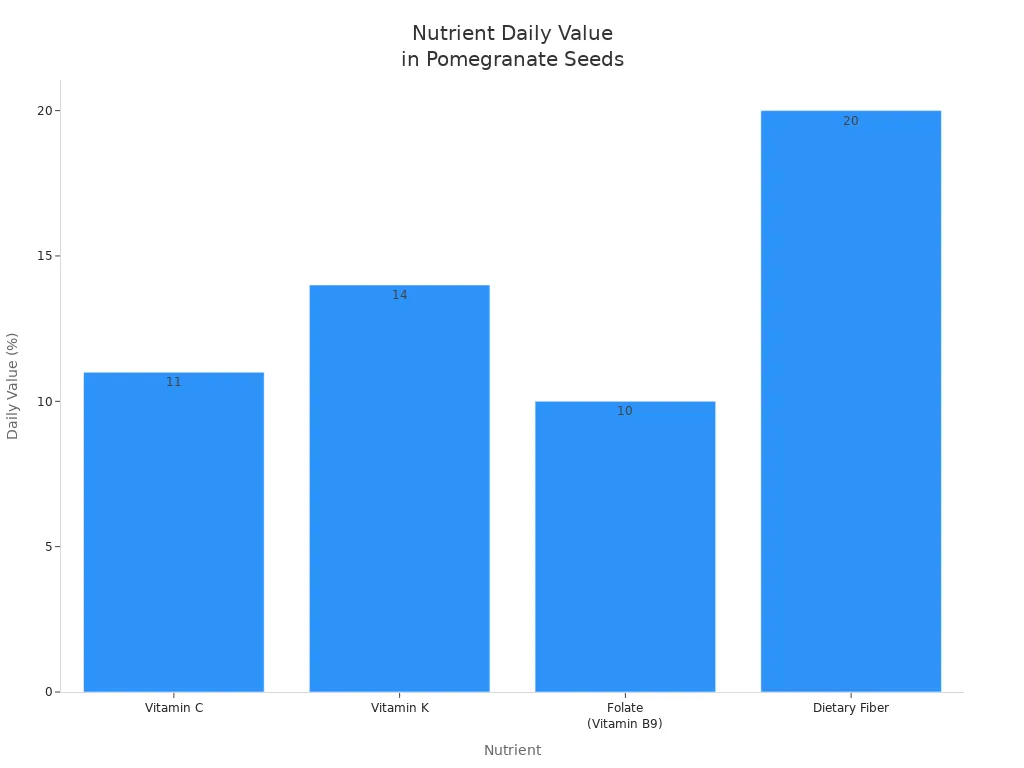
Are pomegranate seeds good for you? Yes, because they have many vitamins and minerals. You get vitamin C, vitamin K, folate, and potassium. These nutrients help your body heal, keep your blood healthy, and support your muscles.
| Vitamin/Mineral | % Daily Value (DV) |
|---|---|
| Vitamin C | 11% |
| Vitamin K | 14% |
| Folate | 10% |
| Dietary Fiber | 20% |
| Thiamine (B1) | 6% |
| Riboflavin (B2) | 4% |
| Niacin (B3) | 2% |
| Pantothenic acid (B5) | 8% |
| Vitamin B6 | 4% |
| Choline | 1% |
| Vitamin E | 4% |
| Calcium | 1% |
| Iron | 2% |
| Magnesium | 3% |
| Manganese | 5% |
| Phosphorus | 3% |
| Potassium | 8% |
| Sodium | 0% |
| Zinc | 3% |
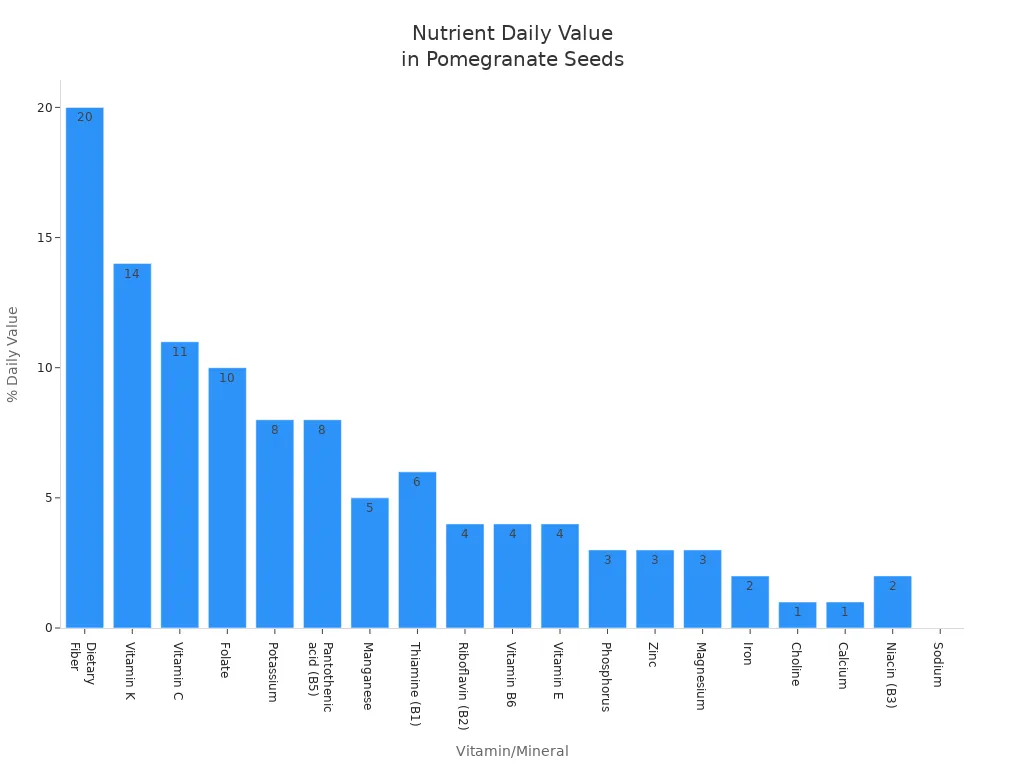
Pomegranate seeds are special because they have polyphenols, copper, and pantothenic acid. These nutrients help your body stay strong and fight sickness.
Antioxidants and Fiber
Are pomegranate seeds good for you? You get lots of antioxidants and fiber. Antioxidants protect your cells from harm. Fiber helps your digestion and makes you feel full.
| Study | Findings |
|---|---|
| Antioxidants and Heart Health | Antioxidants in pomegranates help protect cells from damage and may prevent cancer. |
| Ayurvedic Medicinal Food | Pomegranates have been used for their antioxidant properties to combat oxidative stress related to chronic diseases. |
Pomegranate seeds have polyphenols and flavonoids. These are strong antioxidants. They help stop cell damage from free radicals. Eating pomegranate seeds may lower your risk of heart disease and some cancers.
Note: Pomegranate seeds have more antioxidants than many fruits. This makes them great for fighting swelling and keeping you healthy.
You also get prebiotic effects from pomegranate seeds. This means they help good bacteria grow in your gut. A healthy gut can lower your risk of some diseases.
Scientific Studies on Pomegranate Seeds
Are pomegranate seeds good for you? Scientists say yes. Many studies show that pomegranate seeds can protect against obesity, diabetes, heart disease, and some cancers.
| Study | Findings |
|---|---|
| Food Applications and Potential Health Benefits of Pomegranate and its Derivatives | Regular consumption of pomegranate fruit, juice, or its compounds can protect against diseases like obesity, diabetes, cardiovascular diseases, and some cancers. |
| The Health Benefits of Pomegranates | Pomegranate juice may inhibit cancer cell movement and suppress growth in prostate cancer. |
| 2022 Comprehensive Review | Pomegranates can significantly improve heart conditions such as high blood pressure and coronary artery disease. |
| 2021 Study on Rats | Pomegranate juice reduced LDL cholesterol by 39% and increased HDL cholesterol by 27%. |
Pomegranate seeds also help raise HDL cholesterol. This is the “good” cholesterol that protects your heart. They may lower blood pressure and help stop kidney stones.
Pomegranate in Traditional Medicine
People have used pomegranate seeds in traditional medicine for a long time. In China, Tibet, and Uyghur cultures, pomegranate seeds treat stomach problems and help wounds heal. These cultures use pomegranate for its helpful compounds and healing power.
Common Misconceptions
Some people think chewing pomegranate seeds is not needed. This is not true. Chewing helps you get all the fiber and healthy fats. Some people skip the white membrane, but it has good nutrients. Eating unripe pomegranate can upset your stomach, so eat ripe fruit.
Why Choose Pomegranate Seeds?
Are pomegranate seeds good for you? Yes, because they give you vitamins, minerals, antioxidants, and fiber. They help your heart, support your gut, and protect your cells. You get all these benefits in a tasty, easy snack.
- Pomegranate seeds are rich in vitamin C, potassium, and fiber.
- They have polyphenols and flavonoids that fight free radicals.
- You support your heart and lower your risk of diseases.
- You help your digestion and keep your gut healthy.
If you want a snack that helps your health, pomegranate seeds are a smart choice.
Pomegranate Health Benefits and How to Eat Them
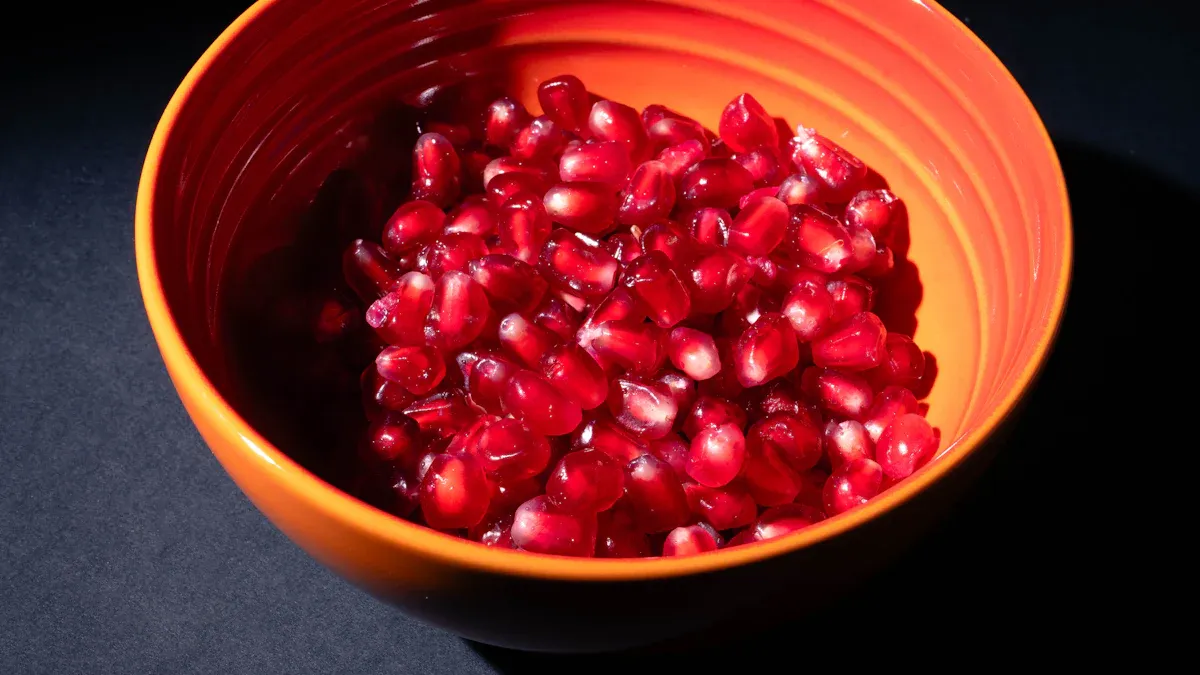
Heart and Blood Pressure Support
Eating pomegranate seeds can help your heart. These seeds have strong antioxidant power. Studies show pomegranate seed oil lowers triglycerides in people with high cholesterol. Pomegranate juice can lower LDL oxidation. This helps protect you from atherosclerosis. A 2022 review says pomegranate juice helps with high blood pressure. Drinking the juice for weeks may lower your blood pressure. The antioxidants in pomegranate seeds fight oxidative stress. This can lower your risk of heart disease and diabetes.
| Study Type | Findings | Conclusion |
|---|---|---|
| Clinical trial | Lowered triglycerides | Heart health support |
| LDL study | Reduced LDL oxidation | Less risk of heart disease |
| Animal study | Fewer atherosclerotic lesions | Protection for arteries |
| Diabetes study | Lowered LDL-C:HDL-C ratio | Reduced heart disease risk |
Anti-Inflammatory and Gut Health
Pomegranate seeds have compounds that fight swelling. Research shows ellagitannins and ellagic acid in the seeds turn into urolithins. Urolithins help stop swelling in your body. These compounds block NFκB and lower PGE2. You get these benefits from juice, seeds, and peels. Pomegranate seeds also help your gut. They act as prebiotics and feed good bacteria like Bifidobacterium and Lactobacillus. Pomegranate extracts can stop bad bacteria like Clostridia. The fiber in the seeds helps your digestion and may prevent diabetes.
Tip: Eating whole pomegranate seeds gives you fiber and healthy compounds for your gut.
Skin and Memory Benefits
Pomegranate seeds have antioxidants that help your skin. Polyphenols in the seeds make your skin healthier and slow aging. Antioxidants protect your skin from UV rays. They also lower swelling from acne or eczema. You can use crushed seeds to scrub your skin. Research shows pomegranate can help your memory. Studies found better memory after stroke and less memory loss after heart surgery.
| Evidence Type | Description |
|---|---|
| Antioxidant Properties | Polyphenols improve skin health. |
| Anti-aging Effects | Reduced age spots and wrinkles in mice. |
| UV Protection | Antioxidants protect against UV rays. |
| Memory Benefits | Improved cognitive recovery post-stroke. |
Serving Size and Storage
Eat about half a medium pomegranate. This is about 3/4 cup or 5 ounces. You get 6 grams of fiber and 15 to 20 percent of your daily vitamin C, folate, and vitamin K. Keep pomegranate seeds in the fridge for up to 5 days in a closed container. You can freeze them for up to one year. Freeze them in a single layer on a cookie sheet for 2 hours. Then put them in a freezer bag.
Easy Ways to Add Pomegranate Seeds
- Sprinkle pomegranate seeds on cereal for crunch and taste.
- Blend pomegranate arils into smoothies for a healthy drink.
- Add pomegranate seeds to dishes like veggie meatballs or lentil patties.
- Put pomegranate arils on salads or grain bowls for texture and color.
- Use pomegranate seeds in desserts like pies and crumbles for extra flavor.
Risks and Who Should Avoid Them
Some people can be allergic to pomegranate seeds. Signs include mouth itching, hives, swelling, stomach problems, or even serious reactions like anaphylaxis. If you are allergic to kiwi, peach, apple, cashew, or pistachio, do not eat pomegranate seeds. People with diabetes should watch how many seeds they eat because they have natural sugars.
When you eat pomegranate seeds, your body gets many health benefits. Research shows eating them often can lower cholesterol and body fat. Look at this table:
| Study | Findings |
|---|---|
| Meydani & Hasan (2010) | Polyphenols might help you feel less hungry. |
| González‐Ortiz et al. (2011) | Drinking juice every day made people lose fat. |
| Lei et al. (2007) | Juice and extract helped people weigh less. |
Add pomegranate seeds to your food. This helps your heart, makes your digestion better, and gives you more nutrients in a quick snack.
FAQ
Can you eat pomegranate seeds every day?
Yes, you can eat them daily. You get fiber, vitamins, and antioxidants. Start with a small amount if you have a sensitive stomach.
Do pomegranate seeds help with weight loss?
You feel full longer when you eat pomegranate seeds. They have fiber and low calories. Add them to snacks or salads for a healthy choice.
How do you remove pomegranate seeds easily?
- Cut the fruit in half.
- Hold it over a bowl.
- Tap the back with a spoon.
- The seeds fall out quickly.